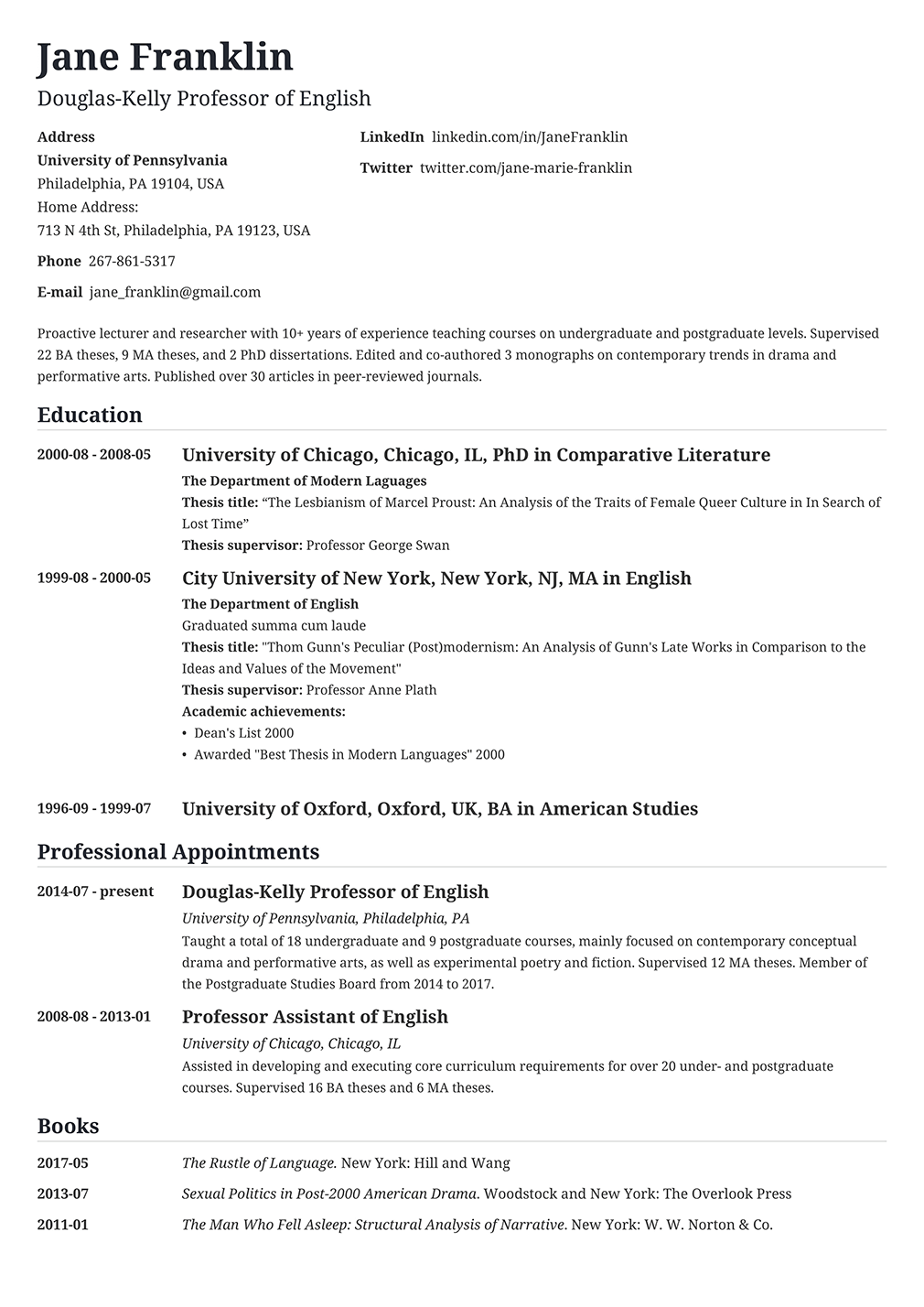
CVs are a vital part of any job application and it is the first time to impress an employer before they may have even met you yet, and formulates a lot of employers opinion about you before they have met you. So its something that I needed to ensure I can get right before applying for potential jobs in the future.
What is a CV
A CV is a concise document which summarises an individuals unique skills, character, past experiences, jobs and achievements. It is used to give potential employers an idea of who you are and what you have achieved before applying for the job. A good CV can boost someones chance of getting an interview, and getting that step closer to getting accepted for the job.
Clare Brass, Bangor University’s employability coordinator held a conference teaching how to write a perfect graduate CV, as well as giving useful tips on structuring, things to do to increase your chances of being shortlisted and mistakes people have made before.
Structuring a CV
These are all the headings that were given on how to structure a CV correctly:
- Personal details; contact details
- Personal profile: introducing yourself, only needs to be one to two sentences long
- Education: university degree with modules that are suited to the job, your projected degree and dissertation title. A brief summary on GCSE and college level (A-level/BTEC) grades (try to make sure only include ones that are relevant to the job you are applying for).
- Employment/ past work experience/ current employment: General dates and address for each, usually done in bullet points for each one. Some jobs may not seem relevant to the job that you are applying for but can be used to demonstrate other skills, such as team skills or communication.
- Additional information: software, Microsoft packages, driving licenses, languages, social media and other achievements and interests that are relevant to the job applying for or demonstrate other useful skills.
- References: one academic and one work based
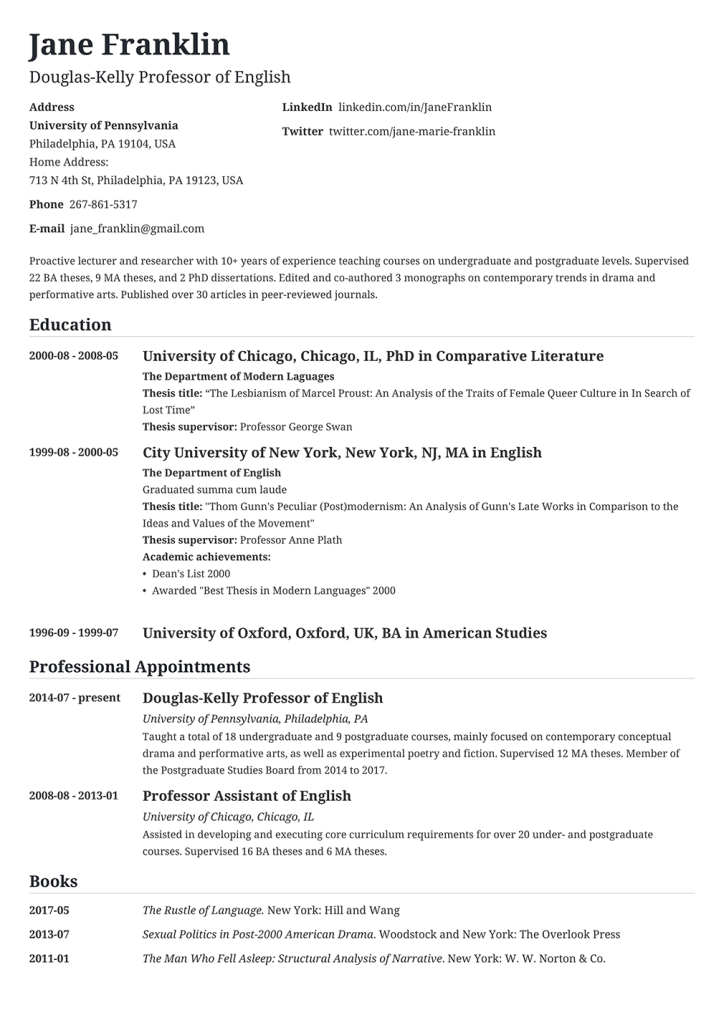
Photo link:
https://zety.com/cv-examples
Top mistakes made in CVs
Even once the structure of a CV has been established there are still mistakes that can be made. These mistakes can be made easily, especially if people are not careful, which could end up loosing the job you are applying for.
- Bad layout: must be easy for the employer to find the key information which makes them want to employ you, as well as being easy to navigate.
- Not adapting for the specific job: adding random experiences or qualifications that are not specific to the job can make employers dismiss you as a candidate as it shows you haven’t thought about the job and what it involves.
- Bad grammar
- Irrelevant information: This can include date of birth, nationality and gender. These are all examples of information that is not needed.
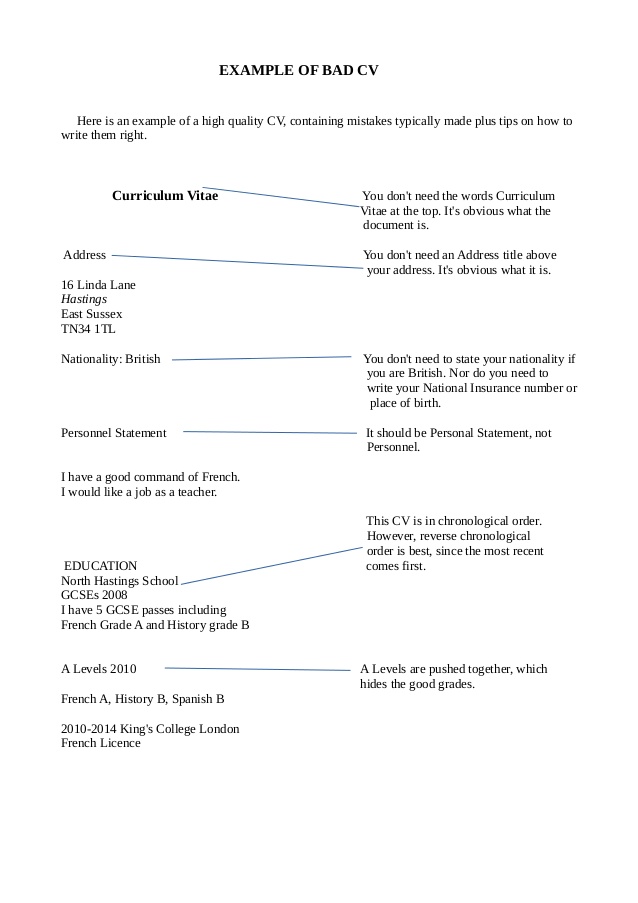
Photo link:
https://www.slideshare.net/cifpvilladeaguimes/example-of-bad-cv
Increasing your chances to be shortlisted
If you avoid the mistakes stated above and have structured your CV correctly by following these last steps it can hopefully insure your chances of getting shortlisted. It is also good practice before submitting a CV to get someone to proof read it and go over it a few times making sure everything is correct and makes sense.
- Do you have a good understanding of the job?
- Do you have the right work ethic for the job?
- Do you have the desirable qualifications, skills and experiences for the job?
- Have you presented potential and enthusiasm for the job?
My reflection
This was a really beneficial talk as it furthered my understanding of what to do and not do when writing a CV. It has also boosted and improved my current CV, which will improve my chances of future carer choice as I may have more chance of potential employers employing me due to my CV being improved.
 oceanmarinebiology.science.blog